The best time to go to Mallorca is late April to early June or September to mid-October, when air temperatures sit between 22–27°C, the sea is warm enough to swim comfortably, and the island is not overwhelmed by summer crowds. If you want beaches and nightlife without compromise, July and August deliver, though you should expect heat above 30°C, packed anchorages and premium prices for everything from hotels to boat charters.
The honest answer is that the right month depends on what you want to do. If your trip includes a day on the water (whether that means exploring hidden coves by sea, snorkelling off the stern, or chartering a boat around the southwest coast), timing matters beyond just weather. Yacht charters in Mallorca run from late April through October, and the peak weeks in July and August book out months in advance, so knowing the season shapes both your experience and your options.
Below you’ll find a breakdown by season, a month-by-month sea temperature table, and a practical guide to matching your plans to the calendar.
Mallorca by season: what to expect
Spring (April – May): the sweet spot
April and May are the most balanced months on the island. Daytime temperatures climb from around 18°C in early April to 23–24°C by late May. The sea reaches 17–19°C, cool for long swims but perfectly comfortable for a boat day with stops. The tramuntana, the island’s prevailing northwest wind, is still present in April, which makes the northern coast dramatic and good for sailing, but occasionally choppy for motor yachts heading to Formentor.
Spring is when Mallorca looks its best on land: the Serra de Tramuntana is green, almond blossoms are still fading in the valleys, and wildflowers cover the inland tracks. Palma’s harbour opens up its terraces and the weekly markets in Sineu and Pollença fill without being unbearable. Prices for accommodation and charters are noticeably lower than summer, and the best anchorages (Cala Tuent, Cala Figuera de Formentor, the north coast near Sa Calobra) have space.
Summer (June – August): peak season
June is arguably the most overlooked month on the island. Temperatures are hot but not oppressive (26–28°C), the sea hits 22–23°C, and the crowds haven’t fully arrived yet. Book accommodation early and June feels like August with a discount.
July and August are full peak. Air temperature averages 30–32°C and the sea climbs to 25–27°C, ideal for swimming. The island’s energy is high: open-air concerts, night markets, beach clubs in full swing. The downside is real. The best anchorages fill by mid-morning. Roads to popular beaches like Es Trenc or Cala Agulla require early arrivals. Charter fleets are fully booked well in advance, and daily rates reflect the demand.
If peak season is when you can travel, it’s worth it. Mallorca at full pace has a particular energy. Just plan ahead, and if you’re booking a boat, do it at least three to four months out.
Autumn (September – October): the insider’s choice
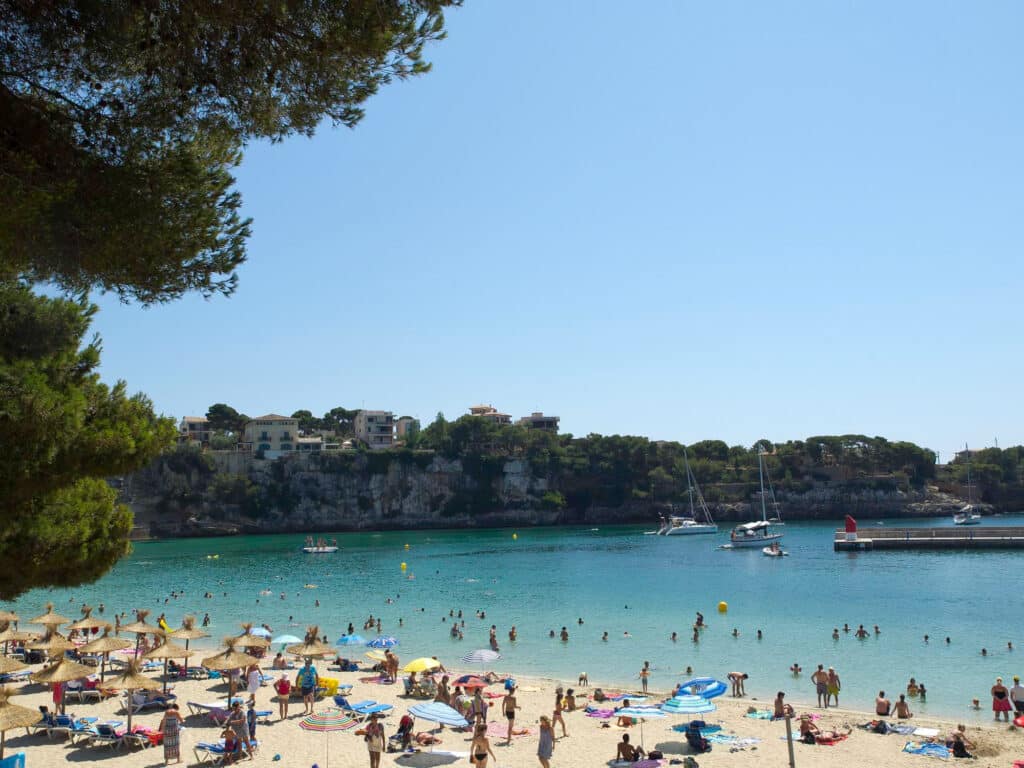
September is the month most people who know Mallorca well recommend. The sea has spent all summer absorbing heat and sits at 24–25°C, often warmer than June. Air temperatures average 27°C during the day and drop pleasantly at night. The island quiets significantly after the first week of September, anchorages open up, and restaurants become themselves again. The grape harvest festival in Binissalem runs through most of the month, a good excuse to head inland.
October stays warm (around 22°C air, 22°C sea) through the first half and begins to cool noticeably from mid-month. Rainfall starts to increase; October is statistically the wettest month, though rain tends to come in short, intense bursts rather than persistent drizzle. For sailing and boat days, September is the prime window: stable conditions, warm water, and a fraction of the summer traffic.
Winter (November – March): quiet and underrated
Most coastal resorts and many marinas operate on reduced schedules from November to March. The island is genuinely quiet, and that’s either a problem or an appeal depending on what you’re after. Palma is always open and runs well year-round: the cathedral, the old town, the restaurants in Santa Catalina, the cycling roads of the Tramuntana. Many serious cyclists come in February and March precisely because the roads are empty and temperatures hover around 14–16°C.
The sea drops to 14–15°C in winter, which rules out casual swimming for most people. Charter season is effectively closed, though some operators run private trips on request. If culture, hiking, or cycling is the priority and you want low prices and solitude, January to March works well.
Sea temperature in Mallorca month by month
| Month | Air temp. (avg. max) | Sea temp. | Crowds | Best for |
|---|---|---|---|---|
| January | 14°C | 14°C | Very low | Culture, hiking, cycling |
| February | 15°C | 13°C | Very low | Cycling, almond blossom walks |
| March | 17°C | 14°C | Low | Hiking, Palma city break |
| April | 19°C | 16°C | Medium-low | Sailing, hiking, coastal walks |
| May | 23°C | 18°C | Medium | Boat days, beaches, all activities |
| June | 27°C | 22°C | Medium-high | Swimming, charters, beaches |
| July | 31°C | 25°C | Very high | Beach, nightlife, water sports |
| August | 32°C | 27°C | Very high | Beach, swimming, water toys |
| September | 27°C | 25°C | Medium | Best overall: boat, swim, explore |
| October | 22°C | 22°C | Low-medium | Wine harvest, hiking, sailing |
| November | 17°C | 18°C | Very low | City breaks, gastronomy |
| December | 14°C | 15°C | Very low | Christmas markets, Palma |
Best time to go to Mallorca depending on what you want to do
For beaches and swimming: June to September. July and August have the warmest water and the longest days. September gives you equally warm water with significantly fewer people.
For a boat charter: May, June, and September. These months combine good sea conditions, warm water, and a more relaxed pace on the water. The most accessible anchorages (Cala Varques, Cala Mondragó, the north coast coves near Alcúdia) are at their best when they’re not packed. July and August work for charters too, but you’ll share the anchorages and the open-water stretches are busier.
For hiking and outdoor activities: April, May, October. The Tramuntana trails, including the Ruta de la Pedra en Sec (GR 221), are most comfortable at 18–22°C. Heat above 28°C makes the exposed ridgelines genuinely unpleasant.
For lower prices: April and October are the best shoulder months. November to March is the cheapest period overall, but most beach infrastructure is closed.
For festivals and local culture: Late June (Sant Joan), July–August (island-wide summer programme), September (Binissalem grape harvest, Nit de l’Art in Palma).
When to book your trip (and your charter)
For July and August, accommodation and charter availability in Mallorca tightens fast. Good boats with professional crew in the 12–17 metre range (the ones that can handle a group comfortably for a full day) are often fully committed by March or April for peak weeks. Booking six months out for summer is not excessive; it’s simply how the market works.
September is a different story. The season is still fully operational, prices drop compared to August, and there is much more flexibility in availability. It’s also when the Mediterranean as a whole is at its most inviting for extended sailing: stable weather, warm water across the Balearics, Amalfi, Sardinia and the Dalmatian coast. If you’re weighing Mallorca against other destinations, a comparison of Mediterranean yacht charter destinations for 2026 can help you match your dates to the right place.
For spring trips, May books up earlier than people expect. The combination of pleasant weather, lower prices, and operational fleets makes it popular with repeat visitors. April is more relaxed in terms of availability but slightly cooler.
Plan your Mallorca boat day with Naizur
Naizur operates a fleet of 40+ motor yachts out of Mallorca, ranging from day boats for a group of 9 to larger vessels with crew for full-day or multi-day itineraries. Prices start from 480€/day, with departure from Palma or Puerto Portals depending on the boat and the route you have in mind.
The itineraries change with the season. In May and June, the north coast coves are uncrowded and the light is sharp and clear. In September, the south and southwest routes to Cap de ses Salines and the Cabrera archipelago work particularly well, with flat water and excellent visibility for snorkelling. If you know when you’re going, the route and vessel can be matched to the conditions. Browse the full fleet and available dates here to see what fits your group and your calendar.