A Balearic Islands yacht route typically covers Mallorca, Ibiza and Formentera over 7 to 10 days, with Menorca as an optional extension for longer charters. The base port is almost always Palma de Mallorca, which has the best marina infrastructure in the archipelago and the most direct flight connections from the UK and northern Europe. From Palma you can reach Ibiza in a day’s sail, Formentera the following morning, and work back through Mallorca’s south and east coasts before returning to port.
The sailing season runs from May to October. June and September are the most balanced months: winds are consistent, anchorages are not yet at peak capacity, and the sea is warm enough for daily swimming. July and August are the busiest period, with the most popular coves filling by mid-morning and charter fleets booked out months in advance. For anyone planning a yacht charter in the Balearic Islands starting from Mallorca, confirming availability for peak weeks is the first step.
Below is a practical breakdown of the route, island by island, with notes on the best anchorages, passage times and what to expect at each stop.
Route overview: distances and timing
| Leg | Distance (nm) | Motor yacht (approx.) | Sailing yacht (approx.) |
|---|---|---|---|
| Palma to Port d’Andratx | 18 nm | 1.5 hrs | 3–4 hrs |
| Andratx to Port de Sóller | 30 nm | 2.5 hrs | 5–6 hrs |
| Palma to Ibiza Town | 81 nm | 7–9 hrs | 12–16 hrs |
| Ibiza to Formentera (Ses Illetes) | 10 nm | 45 min | 1.5–2 hrs |
| Ibiza to Cabrera (via south Mallorca) | 55 nm | 5 hrs | 9–11 hrs |
| Colònia de Sant Jordi to Porto Cristo | 40 nm | 3.5 hrs | 6–8 hrs |
| Porto Cristo to Palma | 45 nm | 4 hrs | 7–9 hrs |
| Alcúdia to Mahón (Menorca) | 45 nm | 4 hrs | 7–9 hrs |
Starting point: Palma de Mallorca
Palma is the natural base for any Balearic route. The Real Club Náutico de Palma and Puerto Portals are the two main departure points for private charters, both with full provisioning facilities. Palma rewards a half-day stop before setting off: the Gothic cathedral, the old town streets of La Lonja, and the waterfront promenade are all within walking distance of the marina. The passage to Ibiza, at around 81 nautical miles, is the longest single leg of the route and is typically done overnight or as an early morning departure to arrive before afternoon.
Mallorca’s southwest coast: Andratx to Sóller
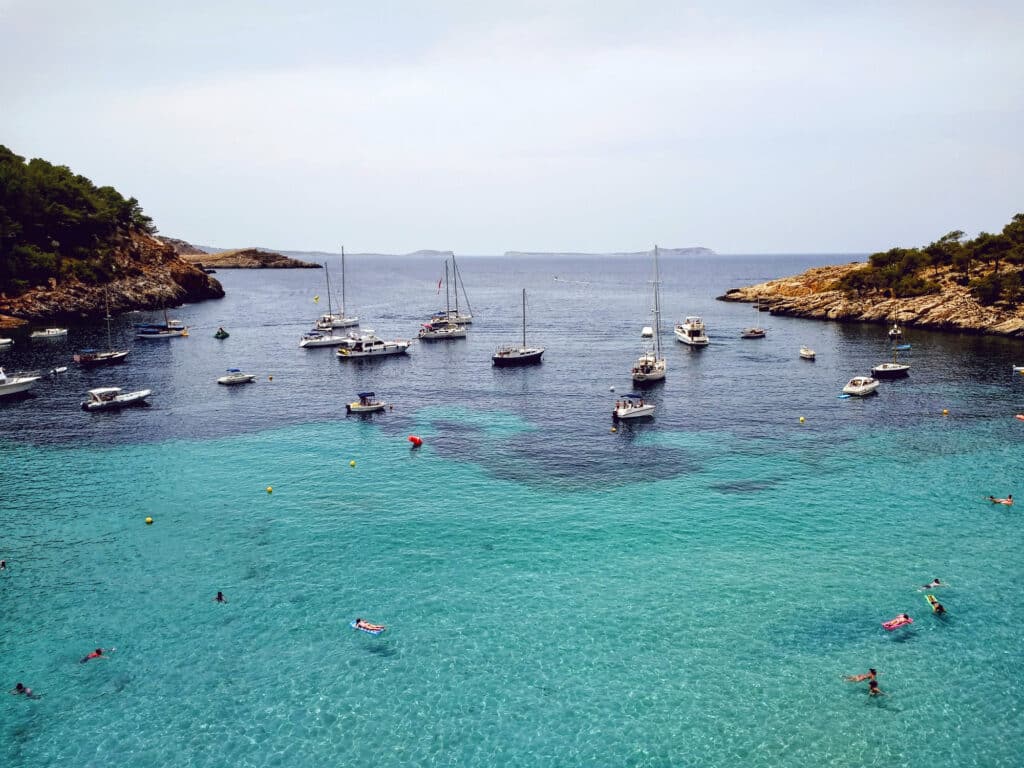
Most routes spend a day or two on the southwest coast before crossing to Ibiza. Port d’Andratx is a compact, elegant marina town at the western tip of the island, sheltered and with good restaurants along the waterfront. Continuing north along the Tramuntana coast, the anchorage at Cala Deià sits below the village of Deià, one of the most photographed spots on the island. Port de Sóller is a horseshoe bay with a small town accessible by the historic tram that connects it to the mountain railway to Palma.
This stretch of coast is exposed to the northwest in strong tramuntana conditions. Check the forecast before departing Andratx heading north; the coast between Andratx and Sóller can be uncomfortable in winds above 20 knots from the north. May and June are the most reliable months for this leg.
Ibiza: town, south coast and the west
The passage from Palma to Ibiza takes around 3 to 4 hours on a motor yacht cruising at 20 to 25 knots, and closer to 8 hours at 10 knots.. Arrive into Ibiza Town harbour in the afternoon: the approach past the UNESCO-listed walled city of Dalt Vila, rising directly above the port, is one of the most impressive harbour arrivals in the western Mediterranean.
From Ibiza Town, the south and west coasts offer the best anchorages. Cala Bassa and Cala Comte on the west coast have clear water and white sand, both manageable in June and September but busy in July and August. Cala d’Hort in the southwest faces the rock island of Es Vedrà and is one of the most dramatic anchorages in the Balearics. The north coast around Cala Benirrás is quieter, with a more local atmosphere and good snorkelling. If you’d rather start from the island itself, Naizur also offers yacht charters in Ibiza from Ibiza Town.
Formentera: the quietest of the main islands
Formentera is a short crossing from Ibiza, roughly 45 minutes to an hour. The anchorage at Ses Illetes, on the northern tip of the island, is consistently rated among the best beaches in Europe: shallow, clear water over white sand in a protected natural park. Formentera has no airport; everyone arrives by sea, which keeps the atmosphere notably different from the other islands even at the height of summer. Cala Saona on the west coast and the salt flats at La Savina are the other standout stops.
Back to Mallorca: south coast and Cabrera
Returning to Mallorca from Ibiza, the south coast route via Cabrera is worth the detour if your schedule allows. Cabrera is a protected national park, uninhabited and accessible only by sea with advance authorisation. The main bay, with the ruins of a 14th-century castle on the hillside, is one of the calmest and clearest anchorages in the Mediterranean. Entry permits can be obtained through the Balearic Islands park authority or your charter operator.
Working east along Mallorca’s south coast, Cala Pi is a narrow inlet flanked by pine-covered cliffs, and Cala Mondragó sits within a natural park with two connected beaches. Cala d’Or and Porto Cristo are the main ports on the east coast, both with good marina facilities and provisioning.
Menorca: the optional extension
Menorca is a full day’s sail north from Alcúdia on Mallorca’s northeast coast, around 45 nautical miles. For 10-day or longer charters it adds a completely different character to the route: quieter, greener, and with some of the most secluded coves in the archipelago. Cala Macarella, Cala Turqueta and the north coast beaches near Fornells are the highlights. Mahón, the capital, has one of the largest natural harbours in the world and a well-preserved old town worth a full afternoon ashore. For a day in the calas without the crossing, Naizur also offers yacht charters in Menorca from Mahón.
Which boat for a Balearic route?
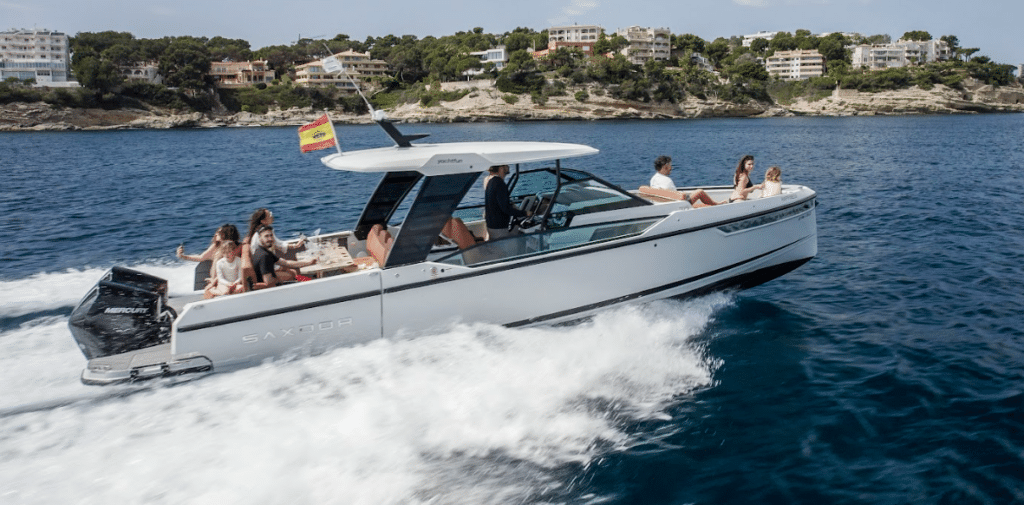
Motor yachts in the 12 to 17 metre range are the most practical for a 7 to 10-day Balearic circuit: fast enough to cover the Palma-to-Ibiza crossing in a single day, stable enough for a group to spend multiple nights aboard comfortably, and small enough to anchor in the shallower coves. Sailing yachts suit the route well in June and September when winds are more consistent, but the longer passage times need to be factored into the itinerary. The key variable is the Palma-to-Ibiza leg: in a motor yacht it’s a long day; in a sailing yacht it’s typically an overnight passage.
Plan your Balearic route with Naizur
Naizur operates a fleet of motor yachts out of Palma, from day boats to larger vessels suited to multi-day inter-island routes. Whether you want a single day exploring Mallorca’s southwest coast or a week-long passage through the full archipelago, the team can match the vessel to the itinerary and the group size. To charter a boat in Mallorca and start planning your Balearic route, browse the available fleet and dates on the Naizur website.