Mallorca works for families because almost everything is close together. From Palma you can reach a shark tunnel, an underground lake, a 1912 wooden train and a swimmable cove in under 90 minutes each, and the island is small enough that you never spend a whole day in the car. What follows is a plan built around what children actually enjoy, and how long each one holds their attention.
A note on spelling before we start: Majorca and Mallorca are the same island. British travellers usually write Majorca, the Spanish spelling is Mallorca, and you will see both used interchangeably here and everywhere else.
The best family attractions in Mallorca
Four attractions carry most of the island’s family reputation, and they are genuinely different from each other, which matters when you are filling a week.
Palma Aquarium
Palma Aquarium holds the deepest shark tank in Europe, an 8.5-metre pool called the Big Blue containing 3.5 million litres of saltwater. A transparent tunnel runs underneath it, so children stand and watch sand tiger sharks and rays glide overhead. The site has 55 tanks in total, more than 8,000 animals from around 700 species, touch pools, and a rooftop jungle garden with a waterfall.
It works from about age three upwards and fills roughly half a day. Pushchair access is good throughout, which is not true of most attractions on this list.
Coves del Drach
The Drach caves at Porto Cristo contain Lake Martel, one of the largest underground lakes in the world at around 115 metres long and 30 metres wide. It was found in 1896 by the French speleologist Édouard-Alfred Martel, and the visit still ends the way it has for decades: a live classical concert played by musicians in rowing boats on the lake, followed by a short boat crossing.
The route is about 1,200 metres and takes roughly an hour. Two honest warnings. It is dark, and the concert requires sitting quietly for around ten minutes, which is a lot to ask of a three-year-old. And it is a 90-minute drive each way from Palma, so treat it as a full day rather than a morning.
The Sóller train and tram
The wooden train from Palma to Sóller has run since 1912 and still uses the original carriages. It climbs through the Serra de Tramuntana, passes through thirteen tunnels and arrives in Sóller, where a vintage orange tram carries you down to the port.
This is the best option for younger children on the list. There is no queueing, no ticket-office scrum, the journey itself is the activity, and the tram at the end reliably produces more excitement than the train.
Water parks
Mallorca has several large water parks concentrated around Magaluf, Palma Nova and the south coast. They do exactly what they promise. Go early, because the queues for the bigger slides build fast after eleven, and check the height restrictions before you commit a full day, because smaller children can end up excluded from most of the park.
Which part of Majorca is best for families?
The southwest coast between Palma and Santa Ponsa is the most practical base for a first family trip. It has the shortest transfers from the airport, the widest range of family hotels, calm shallow bays, and it puts Palma within reach for a day without needing to relocate.
The north around Port de Pollença and Alcúdia suits families with younger children better. The bay at Alcúdia shelves very gradually, so toddlers can walk out a long way in shallow water, and the resorts are quieter than the southwest.
The east coast around Porto Cristo and Cala d’Or is the calmest of the three and puts you next to the caves, but it is the furthest from the airport and you will need a car for everything.
The Tramuntana villages are beautiful and worth a day trip. As a base with children they are hard work: mountain roads, few beaches, and long drives to anything with a slide.
Family-friendly beaches and calas
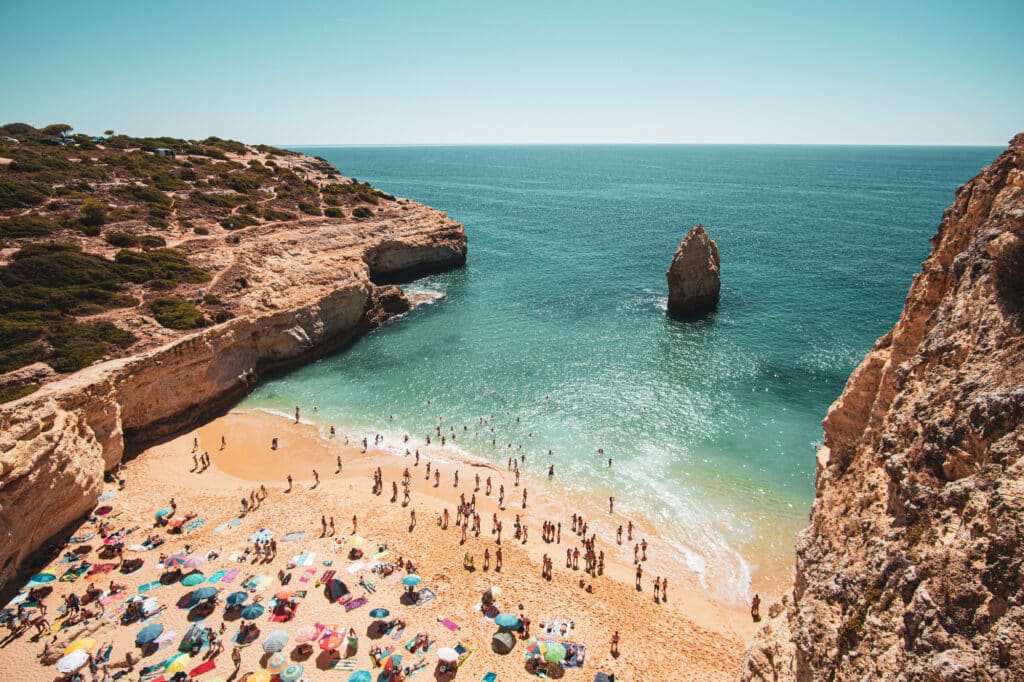
Not every cala on a postcard works with a pushchair. The ones that do share three things: shallow entry, some shade, and facilities within walking distance.
Playa de Muro and Platja d’Alcúdia in the north are the safest bets for small children, both long sandy stretches with very gradual shelving. Cala Millor and Cala Bona on the east coast do the same job with more restaurants behind them. Portals Vells on the southwest coast is smaller and prettier, with sheltered water and caves at one end, but limited shade.
The genuinely spectacular calas, Sa Calobra, Cala Deià, Cala Varques, involve a walk down, a scramble over rocks, or both. Beautiful for teenagers, miserable with a toddler and a bag of beach kit.
A day on the water: the plan most family guides leave out
Every guide to Mallorca with children lists the same four attractions. Almost none of them mention the option that solves the actual problem of a family holiday, which is that everyone wants something different and nobody wants to queue.
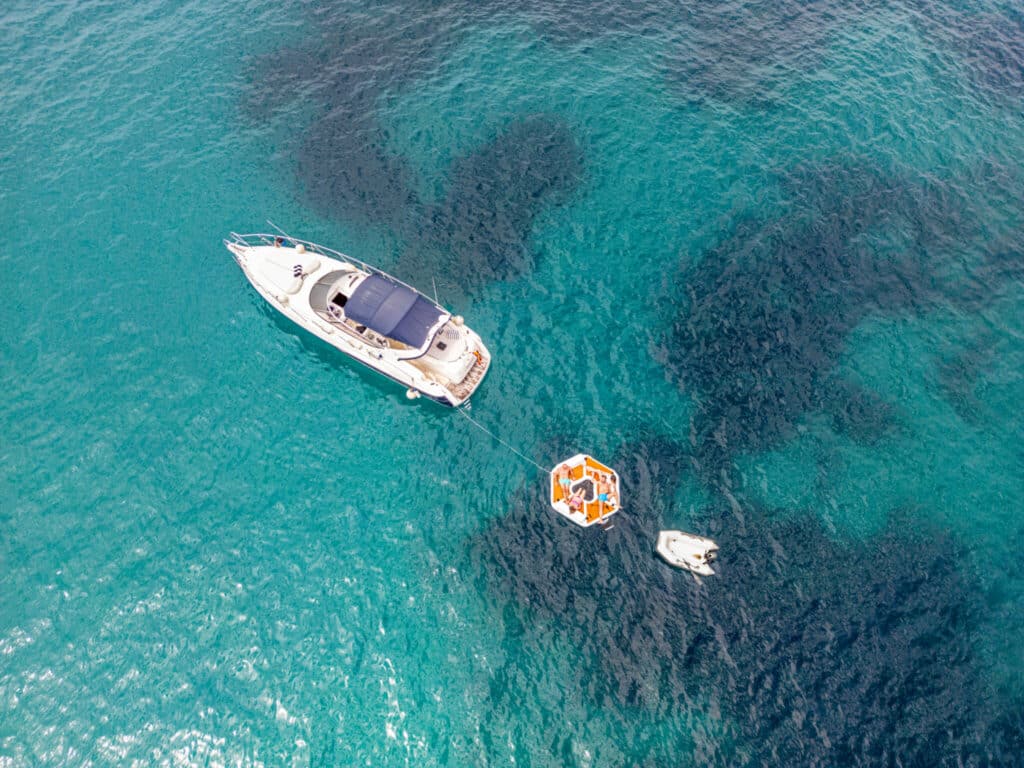
A private boat for the day is the one plan where that stops being a problem. The teenagers get the water toys, the small ones get water they can stand up in, and the adults get a lunch nobody had to book. There is no queue, no timed entry slot, no other families, and if the children have had enough by four o’clock you go back. You cannot do that at a water park you have already paid to enter.
The practical case is stronger than it looks:
- The boat is the activity and the transport. You are not driving to a place and then doing a thing. Reaching the cove is half the day.
- Group size is rarely a problem. Charter yachts carry up to 12 guests, a limit set by the SOLAS maritime convention rather than by cabin space, so a family group of any realistic size fits on a single boat.
- Coves you cannot otherwise reach. The best swimming spots on the southwest coast between Portals Vells and Cala Llamp have no road access, which means no crowds on an August Tuesday.
- Kit is already on board. Standard crewed yachts carry paddleboards, snorkelling gear, kayaks and floats, so there is nothing to hire and nothing to carry down a cliff path.
- A skipper does the hard part. You do not need a licence, and you are not the one anchoring while a five-year-old asks when lunch is.
Two honest caveats, because this does not suit everyone. Very young children, under about three, can find a full eight-hour day at sea long, and shade on smaller boats is limited. And while Balearic mornings are usually flat calm with the breeze building through the afternoon, anyone in the family who is prone to seasickness will feel it more on the passage than at anchor, so a day built around one or two bays rather than a long coastal run is the better plan.
Day charters out of Palma typically run around eight hours. If you have never done it before, how booking a charter works covers the process, the pricing models and what to ask before you commit.
What to do with kids in Palma de Mallorca
Palma holds a family for two days without repeating itself. The cathedral is worth an hour even with children, largely because of the Gaudí interventions and the rose window. Castell de Bellver, the round castle above the city, has a moat, a courtyard and views over the bay, and children can run in it, which is more than most historic buildings allow.
Parc de la Mar below the cathedral has a large artificial lake and open space. The old town’s narrow streets are pushchair-hostile but short. And Palma Aquarium sits at the southern edge of the city, so it pairs naturally with a Playa de Palma beach afternoon.
Is Majorca or Menorca better for kids?
Menorca is calmer, quieter and has better beaches for small children. Mallorca has more to do when the beach stops being enough.
If your children are under five and the holiday is mostly about sand and shallow water, Menorca is the easier island. Its bays are smaller and more sheltered, and the whole island moves at a slower pace.
If you have a mixed-age group, or children old enough to get bored of a beach by day three, Mallorca wins comfortably. It has the aquarium, the caves, the train, the water parks and a real city, none of which Menorca can match. Mallorca is also far better connected, which matters if you are flying with a lot of luggage and a pushchair.
Planning by age
The same island produces very different holidays depending on who is in the back of the car.
Toddlers and under-fives. Base yourself in the north around Alcúdia for the shallow bay. Stick to the Sóller train, the aquarium and the beach. Skip the caves and check water park height limits before booking.
Primary school age. This is the sweet spot for Mallorca. Everything on this page works, the caves included, and children this age get the most out of a day on the water because they can swim and snorkel independently but still find a paddleboard genuinely exciting.
Teenagers. Attractions stop competing with the coastline. Cliff jumping at Cala Varques, kayaking, the hike down to Sa Calobra, and a boat day with a seabob or a wakeboard will land better than any queue-and-ticket attraction on the island.
Planning a family day at sea in Mallorca?
Naizur operates more than 40 motor yachts out of Palma, from 8 to 37 metres, with day charters starting at 480€. Every boat comes with a skipper, and the standard water toys package is included rather than charged as an extra, which is worth checking when you compare quotes.
Tell us the ages of the children and how long you want to be out, and we will suggest the boats that actually fit rather than the biggest one available. Browse our Mallorca fleet and day rates to see what is available for your dates.